The Samango monkey
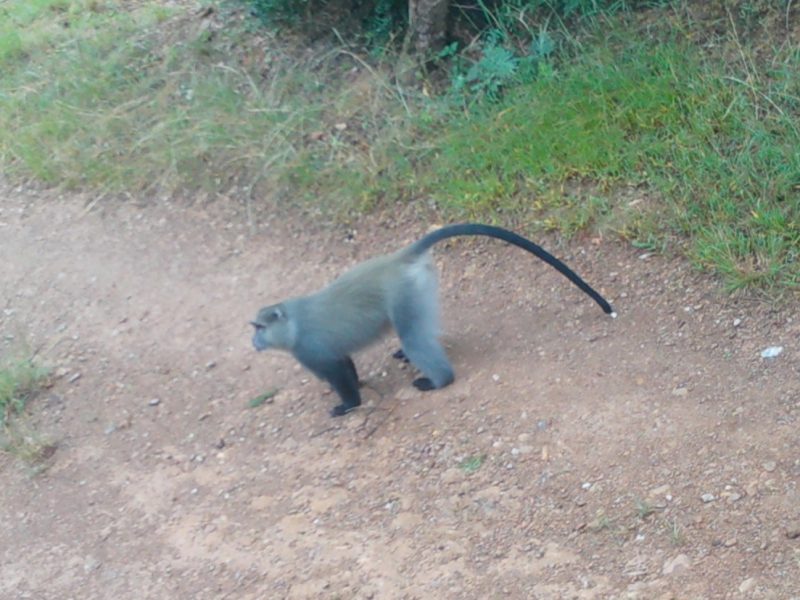
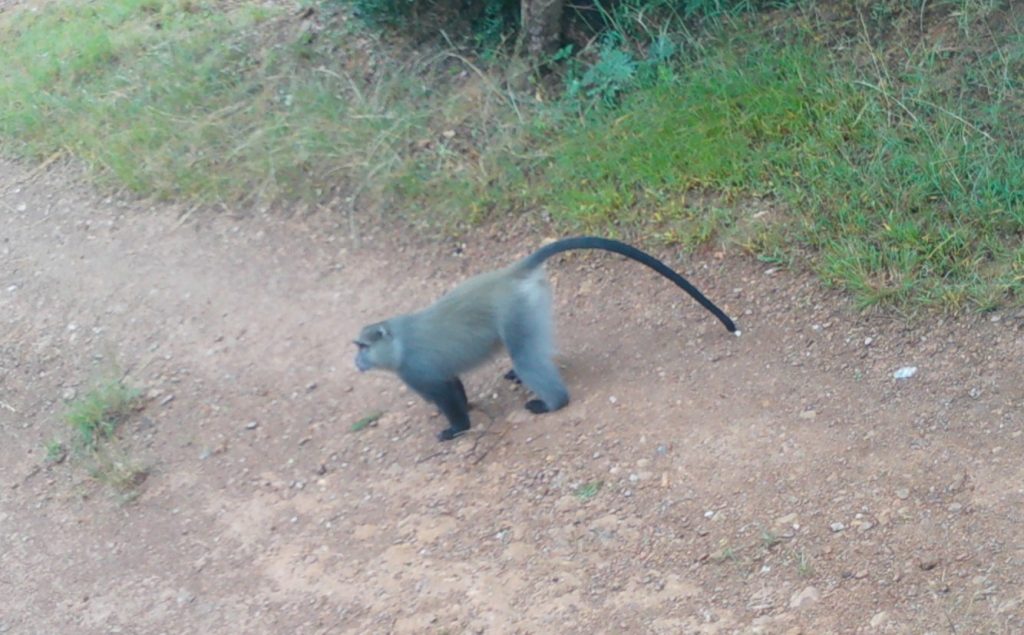
Exciting news from the veld! One of our trail cameras at Mountainlands recently captured a truly exceptional surprise: a lone, male Samango monkey moving across the ground.
To put this snapshot into perspective, this is only the second time in ten years that we have caught photographic evidence of this rare species within the reserve (see link below for a blog story about the first footage). Because these primates are notoriously elusive and spend almost their entire lives high up in the treetops, seeing one on a track — and in an area where they aren’t typically known to roam — is a rare and scientifically valuable event.
Samango monkeys are exclusively forest-dwelling primates. They rely heavily on large, contiguous patches of high-canopy indigenous forest to forage, breed, and stay safely out of reach of predators.
So, what brings a strictly canopy-loving monkey down to earth in the reserve? Nature points to a couple of fascinating biological and environmental drivers: One is natal dispersal. This lone explorer is a male. In Samango society, when a male reaches sexual maturity, he is forcefully evicted from his birth troop by the dominant resident male. These exiled males become nomadic bachelors, traveling vast distances through unfamiliar territory to find a new troop to take over or a new forest patch to call home.
While they prefer to travel seamlessly from branch to branch, the Afromontane forest biomes they rely on are naturally fragmented. When natural terrain breaks up the continuous canopy, these brave bachelors are forced to descend to the ground to bridge the gaps between forest patches.
At a national level, Samango monkeys are classified as Vulnerable, which means they are facing a high risk of extinction in the wild in the medium-term future. Their survival hinges entirely on how effectively we manage and protect our indigenous forest biomes.
While South Africa recognizes two distinct subspecies, extensive genetic and pelage research reveals that our national populations are actually split into three distinct genetic entities: The Coastal, Soutpansberg and Escarpment populations.
Here in Mpumalanga, our populations are heavily localized along the Limpopo Mpumalanga Eswatini Escarpment (LMEE)—traditionally around high-altitude strongholds like Mariepskop, Magoebaskloof, and Woodbush. Our specific residents belong to the inland escarpment subspecies, Cercopithecus albogularis schwarzi.
Samangos are considered ecological keystones for forest health. As they move through the upper levels of the forest, they act as primary seed dispersers—carrying seeds in their cheek pouches, dropping them as they eat, or dispersing them through defecation. Furthermore, their messy eating habits create a “secondary foraging” system on the forest floor. By dropping ripe fruit from the high canopy, they inadvertently provide essential food resources for ground-dwelling mammals like red duikers, bushpigs, and porcupines, who then help disperse those seeds even further.
This trail camera footage isn’t just a cool photo. Every piece of data—even a single frame of a lone male tracking across the ground—helps us better understand how they utilize our landscape and how we can best preserve the wild spaces they need to survive.
Samango photographed on Mountainlands | Mountainlands Nature Reserve