
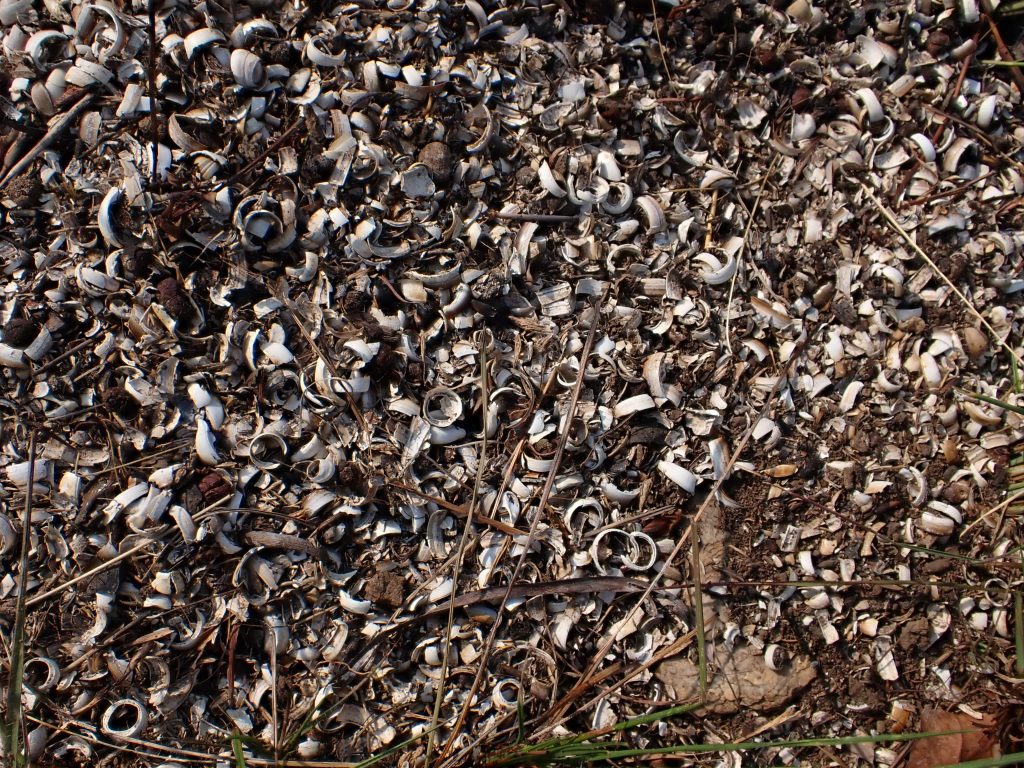
Midden contents
A civet or mongoose midden – a communal latrine for territory marking – is a scientific data dump revealing what local predators have been eating. If you poke around it, you’ll often find piles of curled, glossy millipede fragments as millipede exoskeletons are simply too tough to digest.
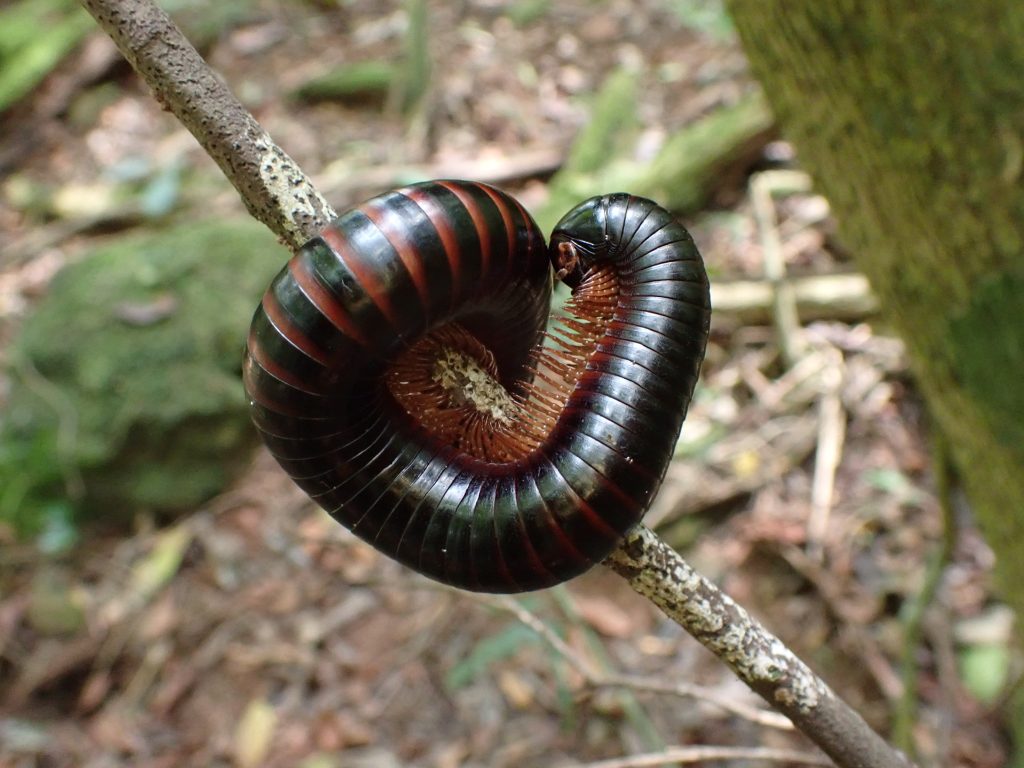
A Mountainlands millipede
Millipedes might look like harmless little rollers trundling across forest floors, but many pack a chemical punch. They ooze an impressive cocktail of noxious chemicals like benzoquinones, which burn, stain, and irritate the skin and mucous membranes of would-be predators. For most animals, a mouthful of millipede equals an unforgettable life lesson. But in Africa, some creatures see this chemical hazard as… lunch.
A surprising cast of predators has evolved ways not only to tolerate millipede toxins, but to actively seek them out, turning a would-be poison pill into a nearly competition-free buffet.
The Millipede Appreciation Society
After the summer rains, millipedes erupt from the soil. African civets, several mongoose species, and a miscellany of birds—from hornbills to starlings—treat them as a buffet: protein-rich, water-rich, and conveniently slow moving.
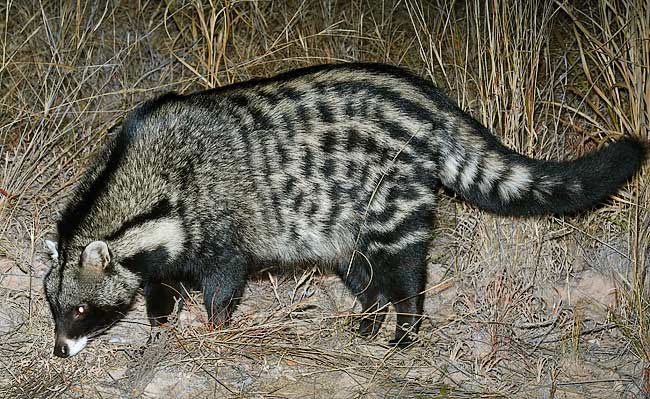
African Civet. Photo: W Tarboton
Each predator has its own culinary style. Birds thwack millipedes against rocks to squeeze out the worst of the defensive chemicals. Mongooses roll them in dirt or manipulate them like toxic sushi, encouraging the arthropods to release their chemical arsenal before consumption. Civets gulp them down and let their digestive system sort out the details.
The question is: How do they survive the toxins? This is where the biology gets interesting—and clever. Animals that regularly eat chemically defended prey have several adaptations that help them manage the toxic load: These include detoxifying enzymes, which chemically modify benzoquinones and related compounds, rendering them less harmful. Some predators host bacterial communities capable of breaking down or metabolizing millipede toxins before they cause trouble.
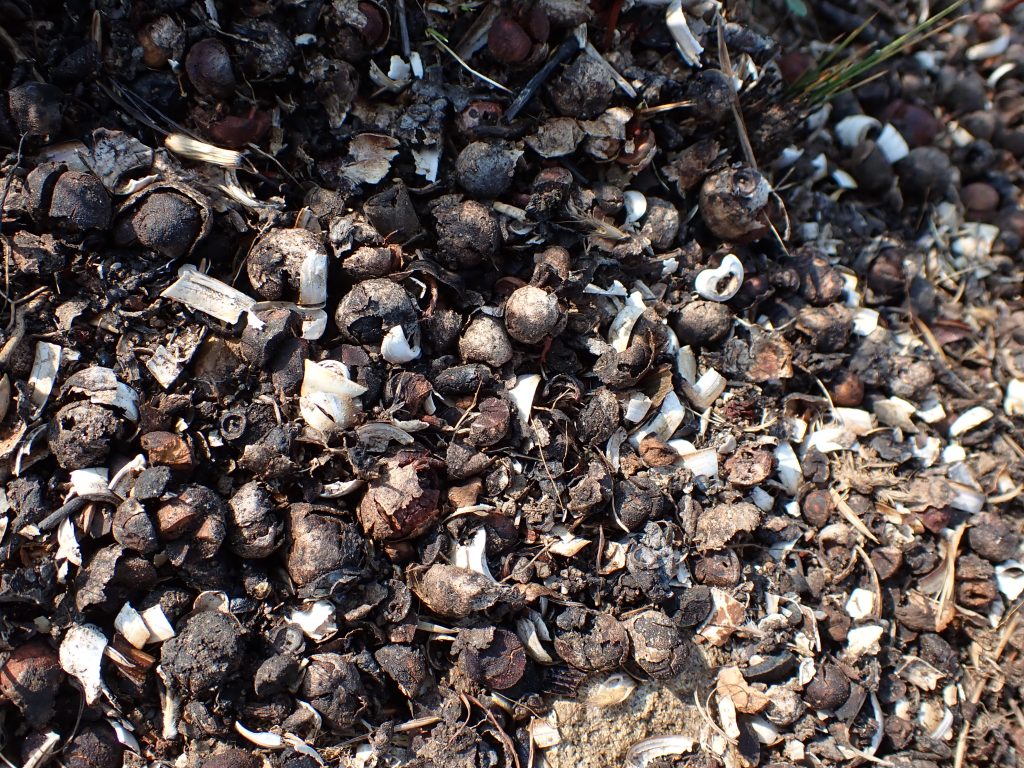
Remnants of seeds in a midden
Animals often eat millipedes alongside other foods—seeds, fruits, insects—helping dilute toxins. In many droppings, millipede remains sit next to seeds as can be seen in the photos, a clue that these predators practice toxic load management without even realizing it. Also, by eating millipedes gradually, predators avoid overwhelming their detox systems. It’s the wildlife equivalent of pacing yourself at a chili-eating contest.
Across the Mozambique Channel, Madagascar’s lemurs have taken millipede use in a very… creative direction.
Several lemur species, including the red-fronted brown lemur and black lemur, have been documented biting millipedes and rubbing them over their fur, often with an expression of profound bliss. They also occasionally eat them.
Scientists think this is strongly suggestive of self-medication combined with intoxication.
Millipede secretions contain compounds that can deter parasites. When lemurs smear these secretions over their fur, the chemicals act as a kind of natural insect repellent—particularly effective against mosquitoes and parasites.
The benzoquinones and related compounds can also act on the nervous system. Lemurs appear to enter a mild intoxicated state after rubbing millipedes, becoming relaxed, slightly dazed, and sometimes visibly blissful. Millipede chemistry differs by region, and this may help explain why lemurs appear to get intoxicated but African civets and mongooses do not. African civets or mongooses feed in a straightforward, deliberate way and their adaptations seem geared toward efficient detoxification – not recreational chemistry.
