Every October, as the spring warmth awakens the veld, a small team of dedicated scientists and field observers from the Lepidopterists’ Society of Africa (Lepsoc) – working alongside the provincial conservation authority, Mpumalanga Tourism and Parks Agency (MTPA) – head into the hills. They carry cameras, GPS units, and make careful notes, embarking on an urgent seasonal mission: checking on three of South Africa’s rarest and most unique flying treasures. While Mountainlands is home to roughly 16% of South Africa’s butterfly species – from vibrant Swallowtails to radiant Pansies – it holds legendary status in the insect world because of three highly specialized, localized endemics:
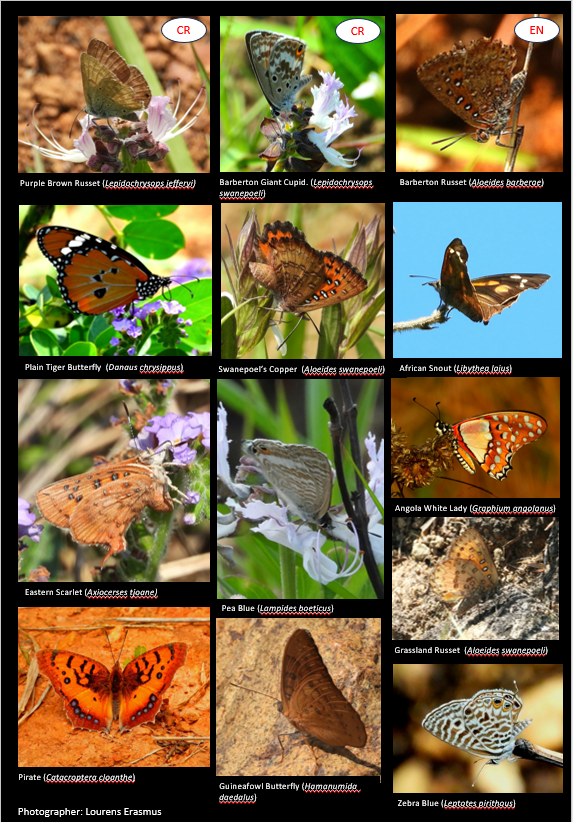
1. Jeffery’s Blue (Lepidochrysops jefferyi). IUCN Status: Critically Endangered. A delicate, shimmering blue butterfly whose delicate flight makes it a prized sight along hilltops.
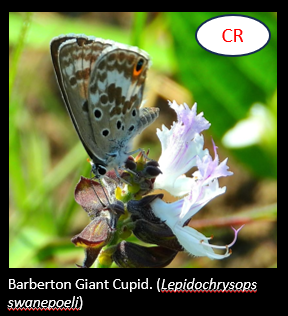
2. Swanepoel’s Blue (Lepidochrysops swanepoeli). IUCN Status: Critically Endangered. Named after famous South African lepidopterist DA Swanepoel, this rare species flashes iridescence as it searches for its host plants.
3. Barbara’s Copper (Aloeides barbarae) IUCN Status: Endangered. A fiery, metallic-orange copper butterfly that relies on very specific micro-habitats along the montane ridges.
According to Lourens Erasmus, a fellow researcher and member of the Lepidopterist Society of Africa, this season’s monitoring revealed an interesting shift: their northernmost habitats hosted fewer butterflies compared to the bustling southern populations observed last year. Yet, the reserve still put on a breathtaking show, with all three prized rare species making a welcome appearance.
What makes these butterflies so fascinating isn’t just their rarity – it is their astonishing symbiotic relationship with ants. The life cycle of the Lepidochrysops blues plays out like a natural thriller: The female butterfly lays her eggs on the flowers of a specific wild plant, Ocimum obovatum. After feeding briefly on flower buds, the tiny caterpillar drops to the ground and trickles out sweet, sugary secretions along with special chemical pheromones. Host ants (Camponotus species) are tricked by these scents into thinking the caterpillar is one of their own larvae. They carry the caterpillar deep into their subterranean anthills. Safe inside the dark ant nest, the caterpillar spends the autum and winter protected from predators and weather, feeding directly on ant larvae. By October, the caterpillar pupates and transforms. When the adult butterfly emerges, it must rush out of the anthill before the ants realize they have been deceived.
Because these species emerge in single, brief seasonal generations, October is the critical window. Lepidopterists scramble up specific rocky ridges and drainage lines inside Mountainlands to monitor population trends. They track the peak emergence time, check on the habitat health and log new discoveries for the reserve, bringing the checklist past 140 + discoveries to date.